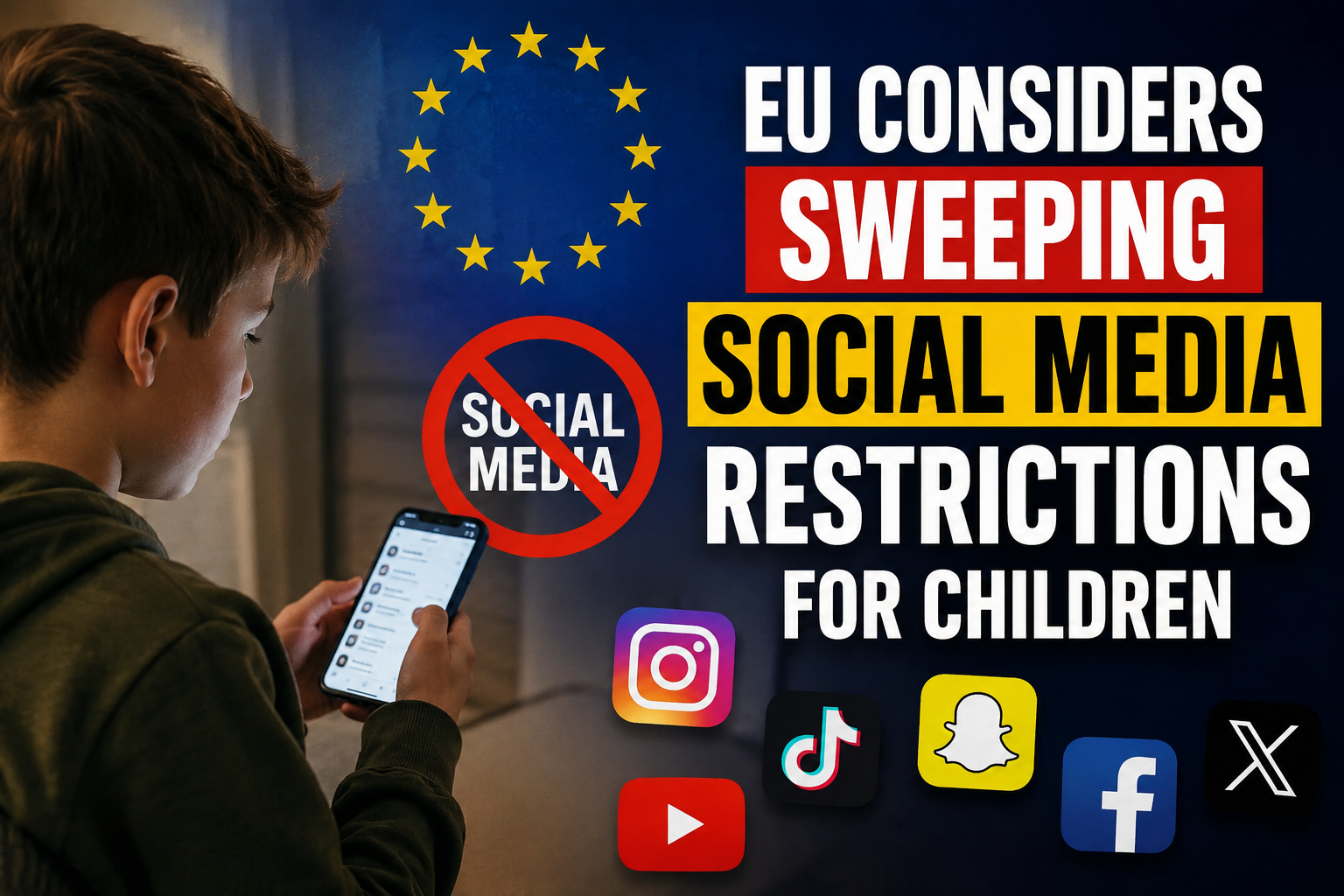
Europe just put Big Tech on notice.
Lawmakers across the EU are hammering out a fresh batch of rules aimed at one thing: keeping kids safer online. And if you think this is just another round of toothless guidelines, think again.
We're talking about potential changes to how Instagram, TikTok, Snapchat, Facebook, and X operate for anyone under 18. Not tweaks. Structural changes.
Why now?
Here's the thing — parents have been sounding the alarm for years. Cyberbullying. Predators lurking in comment sections. Algorithms that seem almost engineered to keep a 14-year-old scrolling at 1 a.m.
Sound familiar?
European officials apparently agree it's gotten out of hand. Their argument is blunt: platforms have prioritized engagement and ad dollars over the wellbeing of the very kids using them.
So what's actually on the table?
A few big-ticket ideas are floating around Brussels right now:
- Real age verification — no more just typing in a fake birth year and clicking through
- Killing the addictive stuff — think limits on autoplay, endless scroll, and 2 a.m. push notifications for minors
- Privacy locked down by default — teen accounts would automatically get maximum privacy settings, no strangers sliding into DMs
- Tighter ad targeting rules — less data harvesting from young users to sell them things
None of this is finalized. But the direction is unmistakable.
The mental health angle can't be ignored
Let's be honest — this isn't just about screen time anymore.
Research has tied heavy social media use to rising anxiety, disrupted sleep, and shaky self-esteem in teenagers. The evidence isn't perfectly settled — researchers still argue over how much of this is causation versus correlation.
But policymakers aren't waiting around for a perfect study. They're moving now.
The logic is simple: if an app is designed to maximize the hours a teenager spends staring at it, that's a design problem. Not just a parenting problem.
Tech companies aren't thrilled
Unsurprisingly, the industry has pushback ready.
Age verification sounds simple on paper. In practice? It's a mess.
Some companies argue that forcing users to upload ID documents just to prove they're old enough for an app creates a new privacy risk — one arguably worse than the problem it's solving. Do you really want a database somewhere linking teenagers' government IDs to their Instagram accounts?
That's the tension regulators haven't fully solved yet: protect kids without creating a surveillance nightmare.
Tricky balance. Nobody's cracked it perfectly yet.
Europe isn't doing this alone
This isn't happening in a vacuum.
Australia has already gone further than almost anyone, pushing aggressive age restrictions on social media access. The UK has its own version of this fight brewing. Several U.S. states are drafting similar legislation right now.
There's a pattern here worth noticing: governments worldwide are converging on the same conclusion at roughly the same time.
Coincidence? Probably not.
When enough major markets start demanding the same protections, tech companies often just build the feature once and roll it out everywhere. It's cheaper than maintaining ten different versions of an app for ten different regulatory regimes.
What happens from here
Nothing is locked in yet. The European Commission, member states, and EU lawmakers still have to hash out the finer details — how verification actually works, which companies get covered, what the penalties look like for non-compliance.
If it passes, expect a transition period before enforcement actually kicks in. Tech giants rarely get zero notice on something this big.
The bottom line
This could end up being one of the most consequential tech regulations since the Digital Services Act reshaped how Europe handles online platforms.
For parents, it's a step toward an internet that doesn't treat their kids' attention as a product to be sold.
For tech companies? It's a compliance headache that's about to get very real, very fast.
Either way, the era of "just click the checkbox confirming you're 18" appears to be ending. And once Europe sets a global standard, the rest of the world usually follows — whether Silicon Valley likes it or not.