Twenty grand. That's the number a Canadian court landed on for a video that never should've gone up in the first place.
Here's the short version: a streamer filmed a woman in public, the footage exposed her under her skirt, she asked him to take it down, and he just... didn't. Now he's writing a check.
Let's unpack this one, because it's messier — and more important — than a single headline makes it look.
What Actually Happened
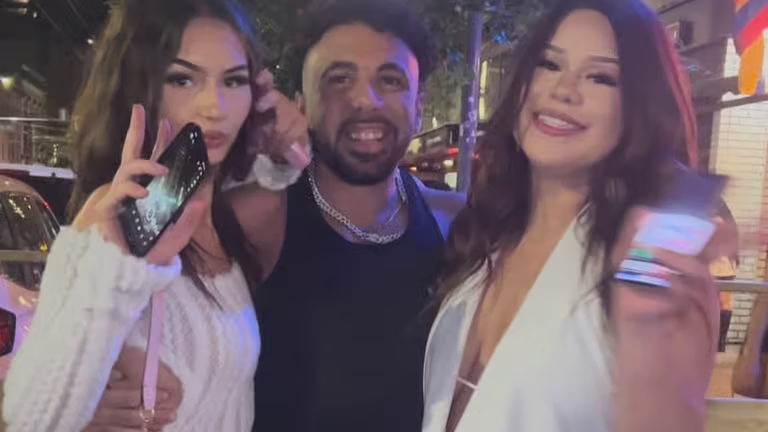
You might know this guy even if the name doesn't ring a bell. He goes by Vibrophone, and his whole thing was scooping strangers off the ground for a quick viral moment. Lift them up, get the shocked reaction, post it, repeat. Classic internet-prank formula.
One of those clips, though, caught something it shouldn't have. Under her skirt. Posted publicly. No warning, no heads-up, nothing.
She noticed. She asked him to remove it.
Nothing happened.
She asked again.
Still nothing.
At some point, asking nicely stops being the move — so she took it to court instead.
What the Judge Said
She won. Not partially. Fully.
The ruling found the footage violated her privacy and caused real, documented emotional harm — this wasn't a "she felt a little embarrassed" situation, this held up as actual damage in front of a judge. $20,000, paid to her, end of story.
Is that a massive number in the grand scheme of privacy lawsuits? Not particularly — some cases settle for way more. But I'd argue the size of the check isn't really the headline here.
What Actually Matters
A court just put it in writing: being famous online doesn't buy you an exception to basic consent.
Feels obvious when you type it out, right? And yet — look around. Prank content is everywhere. Street interviews, "reaction" videos, guerrilla-style filming of total strangers who never signed up for any of it. TikTok's flooded with it. So is YouTube. So is basically every platform that rewards a good shock factor.
Most people filming this stuff are careful. Some clearly aren't.
Where the Actual Line Is
Filming someone on the street? Generally legal — depends on your location, but public space usually means public space, cameras and all.
Publishing footage that exposes someone's body without them knowing? That's not a gray area. That's a different category entirely.
A few things tend to get creators in real trouble:
- Filming intimate areas without the person realizing it happened
- Ignoring a direct takedown request once someone's asked
- Posting stuff designed to embarrass a stranger purely for engagement
- Keeping the video live and profiting off it after someone's objected
None of these are really about the camera itself. They're about what happens after. That's the moment that ends up mattering in front of a judge.
The Stuff That Happens Off-Camera
The $20K is one consequence. It's not the only one, and honestly, it might not even be the worst one.
Brand deals get shaky fast once a creator's name is tied to a privacy lawsuit. Sponsors don't love the optics. Partnerships that were "basically confirmed" have a way of quietly disappearing after headlines like this one.
And viewers — they're catching on too. There's been a real shift lately where "it's just a prank, bro" doesn't land the way it used to. People are starting to ask the obvious question: was this actually funny, or did someone just get humiliated for your view count?
Bigger Picture: Courts Are Catching Up
This case doesn't exist in isolation. Legal systems everywhere are scrambling to keep pace with how fast video spreads now, and honestly? It's overdue.
A pattern's forming across different countries and provinces:
- Sharing intimate footage without consent can mean civil liability
- Some invasive recordings cross into criminal territory
- "I posted it online" is not a legal shield from real-world consequences
A clip can hit a few million screens before you've even finished your coffee. Courts are finally starting to weigh that kind of reach as something that matters — not a footnote.
If You Make This Kind of Content
You don't need a law degree here. You need common sense, mostly.
Filming strangers? Get actual consent — not the "well, they laughed on camera" kind, the real "yes, you can post this" kind.
Someone asks you to take a video down? Do it. That same day. Not after it peaks. Not after someone on your team argues the numbers are too good to walk away from. The second a person objects, everything about the calculation changes.
And ignoring that request doesn't just risk a lawsuit somewhere down the line — it hands a court exact proof, later, that you knew there was a problem and chose the views over the person. That detail alone is what turns "bad judgment call" into "expensive legal mistake."
Bottom Line
This isn't really a story about one streamer losing twenty grand. It's bigger than that, even if the number's small.
It's a signal — courts are catching up to viral culture, and creators treating strangers like free content are going to keep losing these cases, one ruling at a time.
Consent doesn't stop existing just because the camera's rolling. That much, at least, is getting harder and harder to argue with.