One loss stings. Two losses end a season.
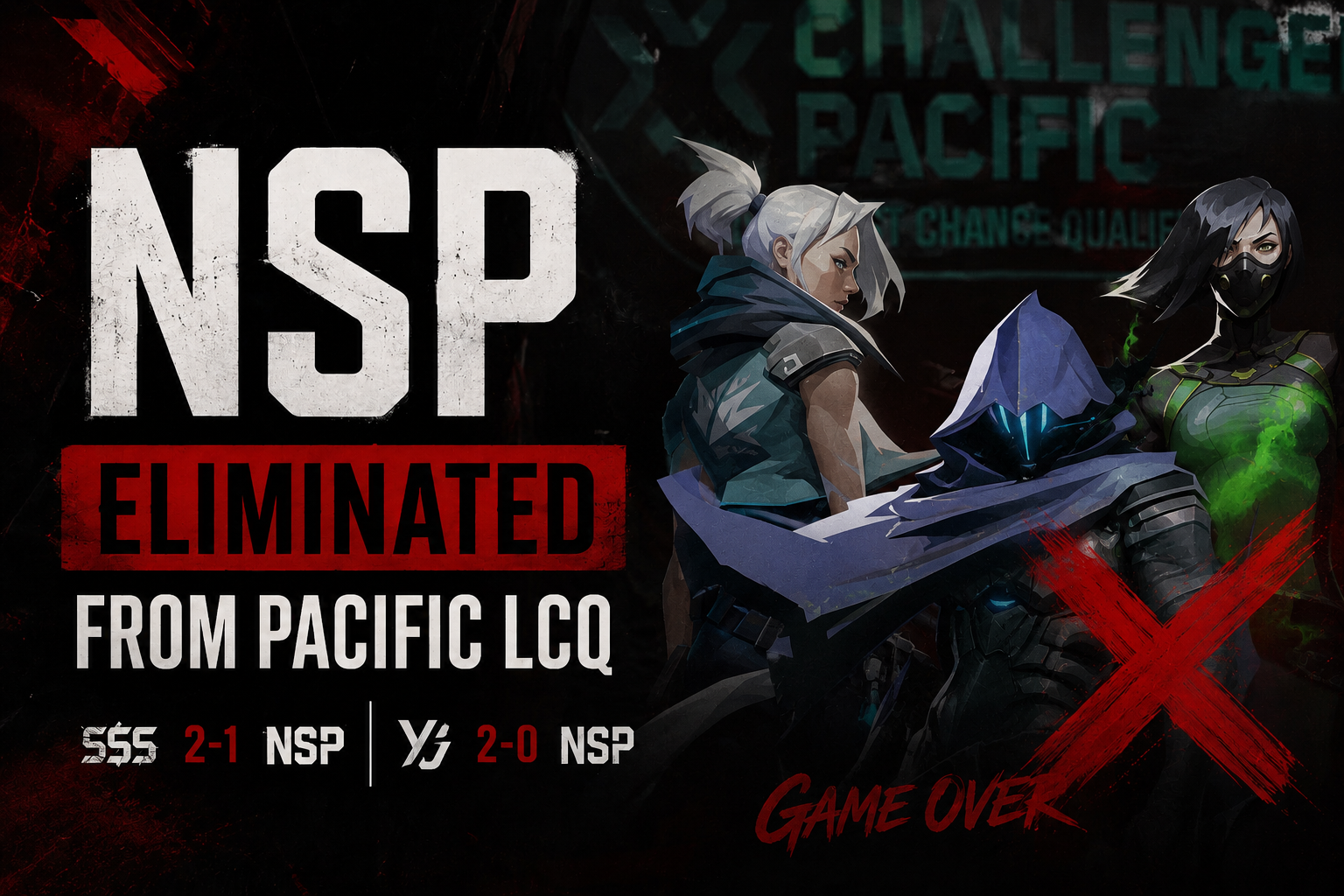
That's exactly what happened to No Salary Peek (NSP) at the VALORANT Challengers Pacific Last Chance Qualifier. India's best team walked in with a trophy in hand and a target on their back. They walked out early, beaten by 555 and then dismantled by Yi-Jing.
Let's talk about what actually happened — and why it matters for South Asian VALORANT.
From Champions to Underdogs, Fast
NSP didn't sneak into this tournament. They earned it.
Back in Split 2, they took down S8UL in a Grand Final that had South Asian fans buzzing. That win made them the region's flag-bearers heading into the Pacific LCQ.
But here's the thing about international brackets: regional dominance means nothing once the plane lands.
Only four teams were competing for a single qualification spot. No cushion. No "we'll get 'em next map." Just win or go home.
NSP went home.
Round One: 555 Draws First Blood
The opener against Thailand's 555 was close. Genuinely close.
NSP brought the same aggressive, disciplined style that had steamrolled South Asia all split. For stretches, it looked like they belonged.
Then the pivotal rounds came — and 555 simply had better answers. Three maps later, the series ended 2-1 in Thailand's favor, and NSP found themselves staring down the lower bracket.
Not ideal. But not fatal either. Not yet.
Round Two: Yi-Jing Slams the Door
This is where it fell apart.
Where the 555 series had tension and back-and-forth momentum, the Yi-Jing match had none of that. Yi-Jing dictated tempo from the first round of map one and never let go.
NSP's attacking sets, the ones that had torn through South Asian defenses for months, got read and shut down repeatedly. The result: a clean 2-0 sweep and an early flight home for India's champions.
Just like that, NSP's 2026 international campaign was over.
Why This Loss Isn't the Whole Story
It's easy to look at a first-round exit and call it a failure. That would be lazy analysis.
Here's what's actually true:
- NSP earned their spot by beating the best South Asia had to offer
- They tested themselves against Pacific-level competition — something regional play simply can't replicate
- Every mistake exposed at this level becomes a lesson for the next split
International reps expose weaknesses fast. That's uncomfortable, but it's also exactly how teams level up. A roster that only ever beats regional opponents never finds out what it doesn't know. NSP just found out — the hard way, on a bigger stage than they're used to.
Think of it like a college athlete going pro for the first time. The skill is real. The gap in polish, tempo, and decision-making under pressure? That only shows up against tougher competition.
The Bigger Picture: South Asia Is Closing the Gap
NSP's run — win or lose — says something important about where South Asian VALORANT actually stands right now.
A few years back, a South Asian team even reaching the Pacific LCQ would've been a minor headline. Now it's expected. Organizations are investing more. Talent pipelines are deeper. The scrims are sharper.
Is South Asia beating the Pacific's elite consistently? Not yet.
Is the gap shrinking every split? Absolutely.
That context matters when you judge a result like this one. Losing to 555 and Yi-Jing doesn't erase the fact that NSP got here by being genuinely the best in their region.
What Comes Next for No Salary Peek
The 2026 Pacific chapter is closed. The next Challengers season isn't far off, and that's where NSP's real response will show up.
Expect roster reviews. Expect strat adjustments based on exactly what Yi-Jing exposed. Expect a team that's hungrier because they now know precisely how far the gap to the top actually is.
For a young roster, that's not nothing. That's fuel.
South Asian fans wanted a deep run. They didn't get it. But they got a champion team that competed on the international stage, absorbed a hard lesson, and now knows exactly what separates "regional champion" from "Pacific contender."
That's not a fairy-tale ending. It's a realistic one — and honestly, it's the kind that tends to produce the better story a year later.