Picture this: your entire future hinges on a keyboard character you never typed.
That's not a thought experiment. That's exactly what happened to a man named Brandon Klayme. One underscore — one — cost him a year and a half of his life.
A Typo That Became a Conviction
Here's the thing about usernames. We treat them like throwaway details. Investigators shouldn't.
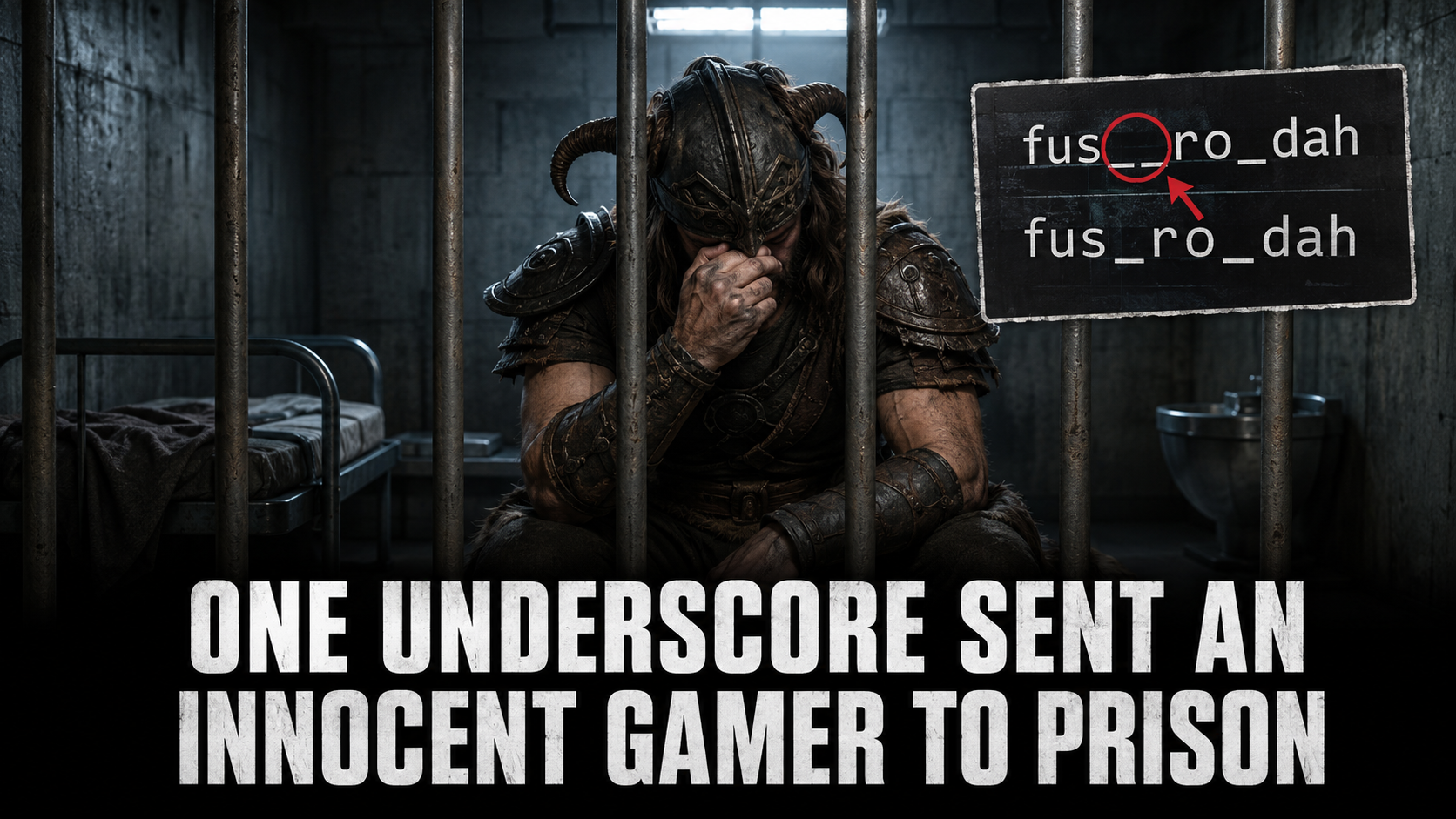
In 2018, Wisconsin authorities were chasing a predator who'd been messaging a 12-year-old girl on Kik. They tracked the account down to a username: "fus__ro_dah" — two underscores after "fus," a nod to the Unrelenting Force shout from Skyrim.
Solid lead. Real evidence. Then someone typed the subpoena.
Only one underscore made it onto the paperwork. "fus_ro_dah." Not the suspect's account. Klayme's.
Kik, doing exactly what it was asked, handed over his information instead. And just like that, the investigation veered off a cliff nobody noticed.
The Case That Should Have Fallen Apart
Canadian police searched Klayme's Nova Scotia home in February 2020. Phones, computers, everything got seized.
They found nothing.
- No messages tying him to the victim
- No images
- No sign he'd even used Kik during the relevant timeframe
Klayme said he hadn't touched that account since 2012 — six years before the crime occurred. Think about that gap for a second. Six years of silence, and prosecutors still moved forward like they had their man.
They didn't.
Convicted Anyway
Despite the empty evidence trail, Klayme was charged with child luring, distributing sexually explicit material to a minor, and possessing child sexual abuse material.
He pleaded not guilty. He kept saying it wasn't him.
Nobody listened. On April 17, 2023, he was convicted. By January 2024, he was sentenced — 18 months behind bars, followed by another 18 months of probation.
And the underscore? Still sitting there in the original subpoena. Missed by police. Missed by prosecutors. Missed by his own defense team. Missed by the judge.
Nobody caught it. For years.
How the Truth Finally Surfaced
Klayme served his full sentence. It was only during the appeal process that his legal team started digging into why the digital evidence pointed at him in the first place.
That's when someone finally lined up the two usernames side by side.
"In the latter stages of preparing my appeal arguments, it was discovered that the subpoena contained a subtle mistake that changed the course of my life," Klayme said in an affidavit, according to court records.
One extra character. That's all it took to unravel — and rebuild — an entire life.
On July 23, 2026, the Nova Scotia Court of Appeal threw out his convictions. And this wasn't a "technicality" ruling, either. Judges didn't just say the evidence was shaky.
They declared him factually innocent. Full stop. He never should have been charged at all.
So Who Was the Real Suspect?
Good question — and one that still doesn't have a clean answer.
Investigators now believe the correct account traces back to someone whose IP address showed up in California. As of the latest reporting, that person hasn't been arrested.
Which means while an innocent man in Nova Scotia was losing his freedom, the actual suspect was likely still out there. For years.
Why This Should Bother Everyone
Let's be honest — this isn't really a story about video games. Skyrim is just the coincidence that makes it memorable.
The real story is about how casually digital evidence gets handled once it lands in a courtroom.
A username isn't a minor detail. It's an identity. Get one character wrong, and you're not looking at a typo — you're looking at a completely different person, a completely different life, a completely different set of consequences.
Consider what should have raised red flags here:
- Zero corroborating evidence on any of Klayme's seized devices
- A six-year gap between his last known use of the account and the alleged crime
- A conviction built almost entirely on an identifier that was never verified against the original source
Any one of these should have slowed the case down. All three together? That should have stopped it cold.
Instead, it took an appeal — and a defense team willing to compare two strings of text character by character — to undo what should never have happened.
The Cost of One Character
An overturned conviction doesn't hand back the 18 months Klayme spent in prison. It doesn't erase the accusation that followed him, or the years he spent fighting to prove something he shouldn't have had to prove: that he didn't do it.
Somewhere, a subpoena clerk typed a username slightly wrong. That's it. That's the whole origin story of a wrongful conviction.
Digital evidence feels precise. It looks precise — clean strings of text, timestamps, IP addresses. But precision only matters if somebody double-checks it.
In Klayme's case, nobody did. Not until it was far too late.