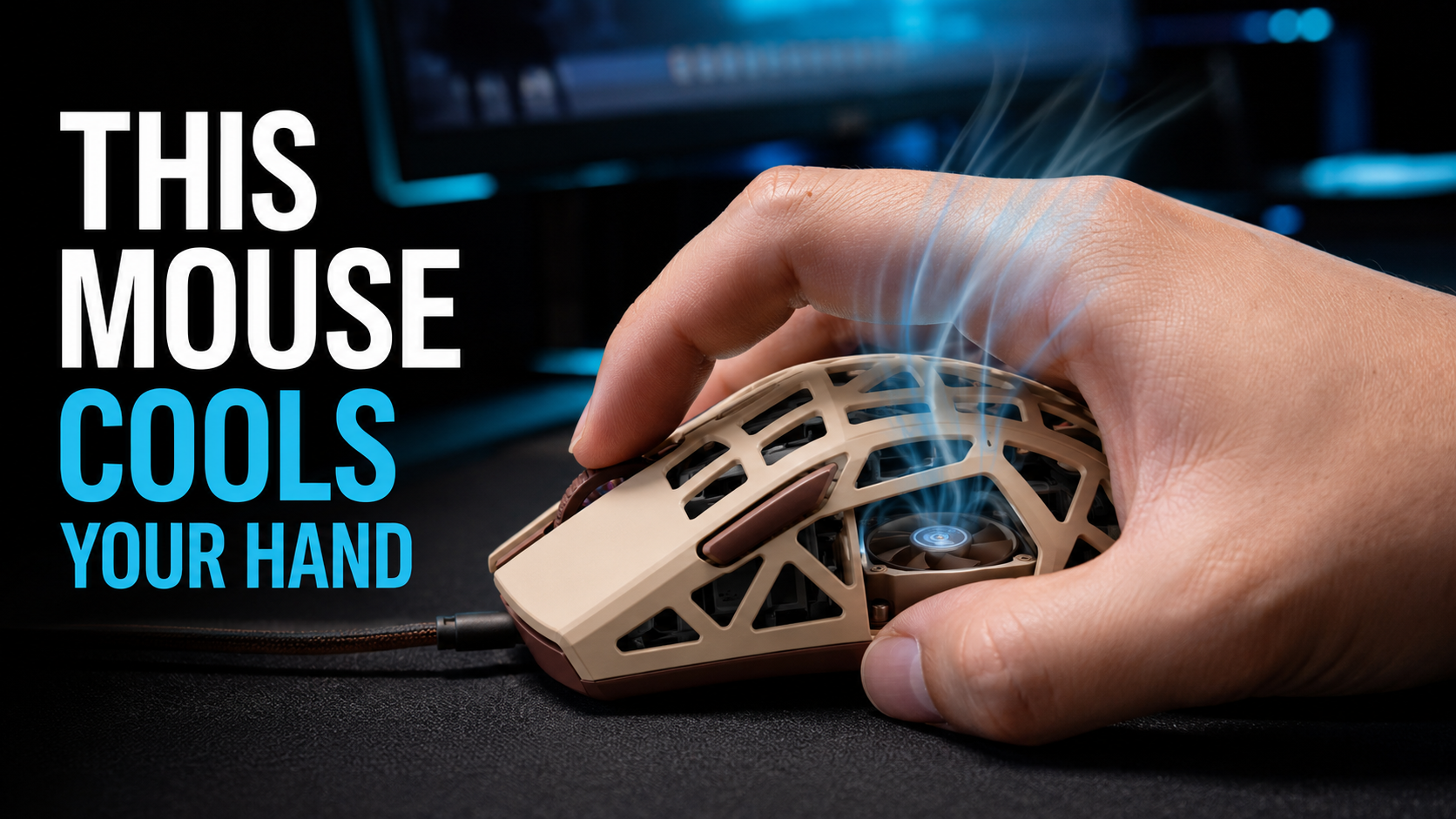
My hand is sweating and I just missed the easiest headshot of my life.
Not a great feeling. You know the one — your grip goes slick halfway through a flick, the mouse feels wrong in your palm, and by the time you've adjusted, the round's over.
Pulsar and Noctua apparently got tired of watching this happen too. So instead of another grip tape or some fancy coating, they did something almost stupid. Almost.
They put a fan in the mouse.
A literal, spinning, PC-style fan. Under your hand. While you play.
I laughed the first time I read that sentence. Then I actually thought about it for a second, and, well — it kind of makes sense?
Okay But How Does a Fan Fit Inside a Mouse
The Pulsar Feinmann F01 Noctua Edition is a wireless gaming mouse with a genuine Noctua NF-A4x10 fan tucked under its open shell. This isn't for cooling the sensor or the chips inside, which is what you'd normally assume.
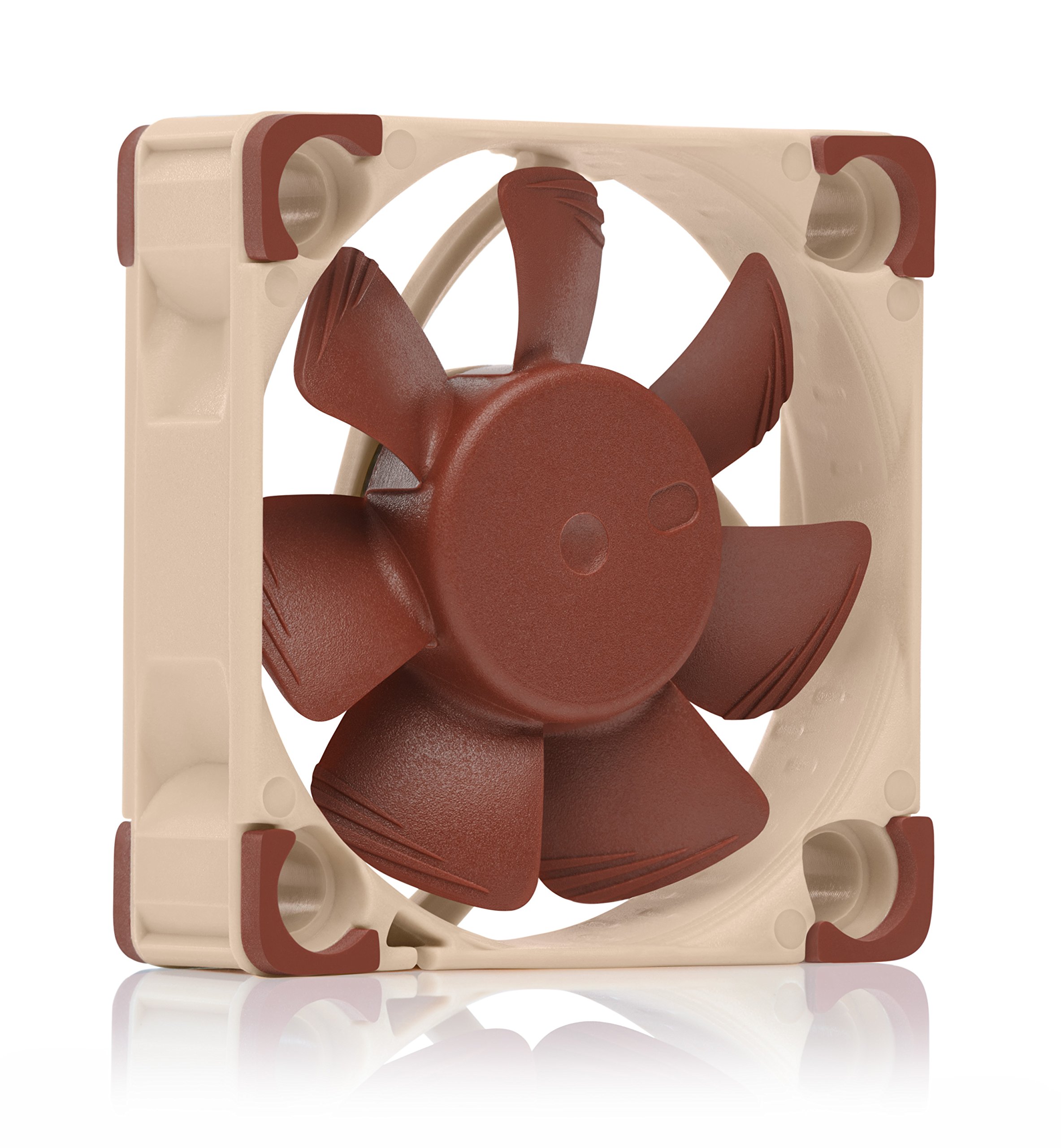
It blows straight up. At your palm. That's it. That's the whole trick.
Less sweat, better grip, fewer of those horrible moments where your hand slides an inch at the worst possible time.
Simple. Almost dumb-simple. But sometimes the dumb-simple ideas are the ones nobody else thought to try.
Who's This Actually For
Not everyone needs this. Let's just get that out of the way.
If you're playing two rounds of a casual shooter after dinner, your palm is probably fine. You don't need active airflow strapped to your desk.
But some people sweat. A lot. And this thing was clearly built with them in mind — think long ranked grinds in Valorant or CS2, gaming through a summer with no AC (we've all suffered through this), or tournament nerves turning your hand into a small swamp before a big match.
Sound familiar? Then keep reading.
And you're not stuck with it running full blast all the time either. Crank it, lower it, or just switch it off — through a button combo, a control on the dongle, or Pulsar's software. Freezing room, fan off, done.
It Weighs Basically Nothing
Here's the bit that actually got me.
A mouse with a built-in fan sounds like it should feel like a brick in your hand. It really, really doesn't.
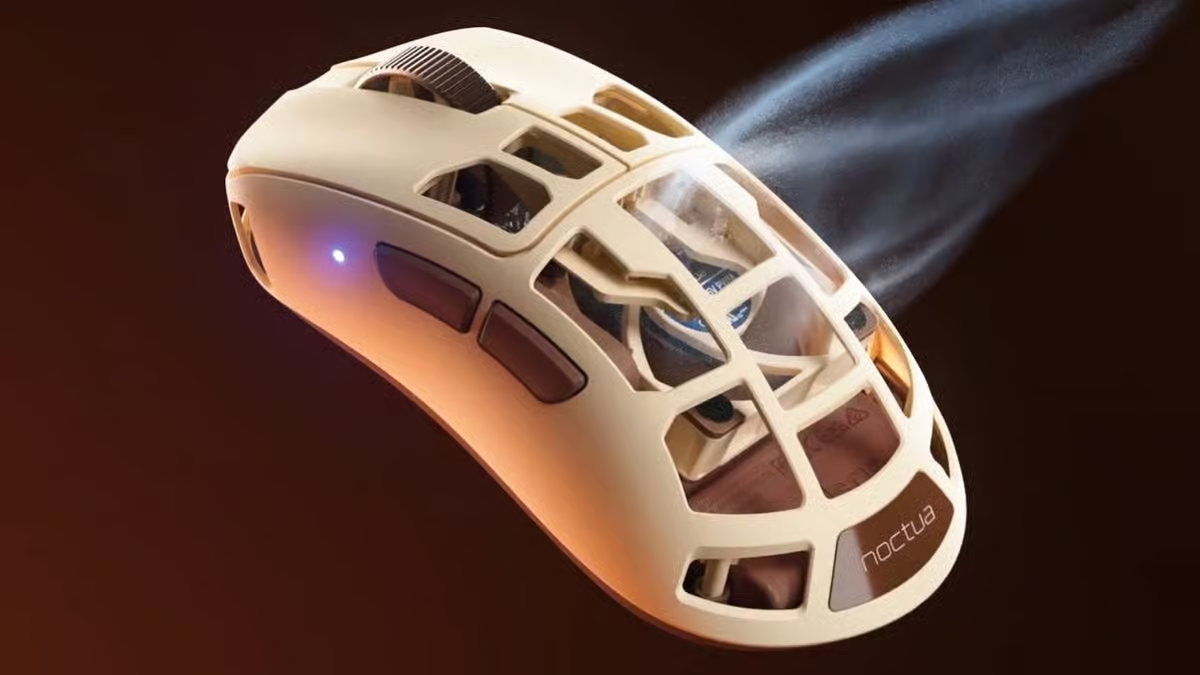
Seventy-three grams. That's the whole weight. Pulsar pulled it off with a carbon-composite shell that's full of holes, on purpose, both to cut weight and to let the fan's air actually escape and reach your palm instead of getting stuck inside a sealed shell.
The result looks kind of mechanical. Skeletal, even. And paired with Noctua's beige-and-brown colorway — the one everyone either loves or hates — it looks nothing like the wall of black RGB mice on your desk right now.
It won't match your setup. It probably won't match anyone's setup, if we're honest. And that might genuinely be the point of the whole thing.
Fine, But Is It Actually a Good Mouse
Strip away the fan gimmick for a second, because there's a real flagship esports mouse hiding under all that airflow talk.
It runs Pulsar's XS-2 sensor, and the numbers are genuinely absurd:
- 42,000 DPI max
- 800 IPS tracking speed
- 70G acceleration
- 8,000Hz polling rate — meaning it talks to your PC 8,000 times a second
Do you need any of that? Probably not, if we're being real with each other. Most of us aren't playing at a level where an extra millisecond changes anything. But competitive players chasing every possible edge will notice, and that's exactly who this mouse is built for.
Optical switches rated for 100 million clicks round things out, using light instead of physical contact so there's no annoying debounce delay slowing you down.
Wireless through the included 8K receiver, or wired via USB-C when you want zero latency or need a charge. Standard stuff, executed well.
Will the Fan Even Survive Real Gaming, Though
Reasonable question. Mice get slammed, flicked, lifted off the desk and dropped back down constantly. Can a spinning fan actually handle that abuse without dying in a month?
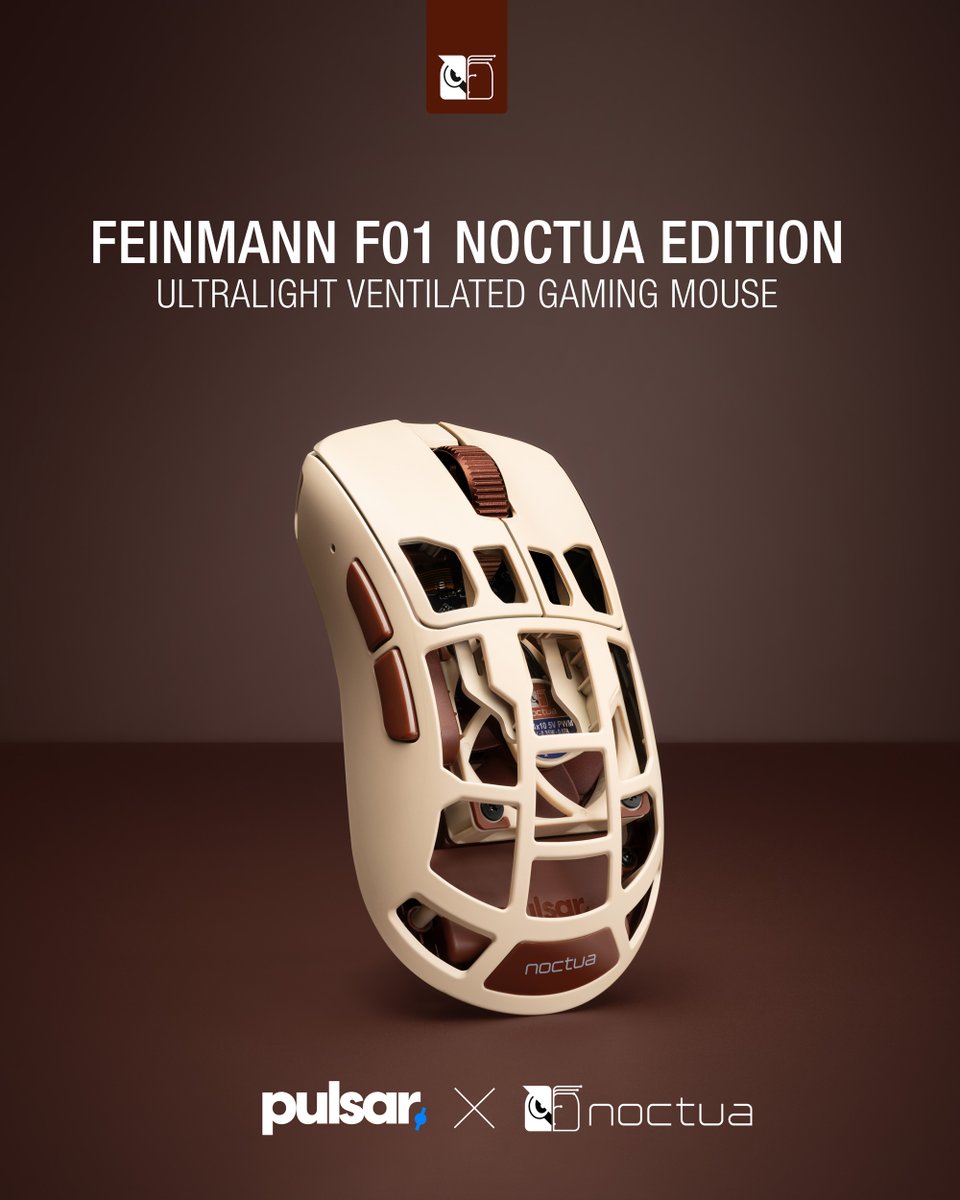
Noctua says yes, and to their credit they didn't just wing it. They built custom test rigs specifically to reproduce the acceleration and impact forces a mouse goes through during real, intense gameplay, then ran the fan through those tests before shipping it.
That's meaningfully different stress than a fan sitting quietly inside a PC case ever has to deal with. Whether it's still humming along after two years of daily ranked matches — nobody actually knows yet, including Noctua probably. But it wasn't thrown together and hoped for the best, which counts for something.
The Price, Though
Here's where I have to be honest with you.
$179.95 in the US. €199.90 in Europe. Sold through Pulsar's own store and a handful of retailers.
That's a lot. A genuinely painful amount for a mouse, even a very good one. There are excellent wireless gaming mice out there for half that price that skip the fan entirely and still perform great.
So who's buying this?
Enthusiasts, mostly. Collectors. Competitive players who've already tried every trick in the book and want one more small edge, whatever the cost. Or, honestly, people who just think a fan-cooled mouse is the coolest weird gadget they've seen all year — and there's nothing wrong with that either.
So, Worth It?
Gaming mice have spent years chasing the same three things. Lighter. Faster. Brighter RGB.
Pulsar and Noctua skipped that race entirely and went after a problem almost nobody else bothered touching.
Sweaty palms.
It's weird. It's expensive. It's about as niche as gaming gear gets, and it's probably not for you — or me, honestly.
But every so often the strangest idea in the room ends up being the smart one. This might just be it.